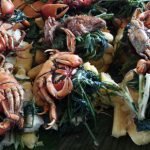
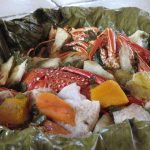
Women cooking in the traditional way on the island of Malicolo — using open fires, earthen ovens and ingredients foraged directly from the surrounding jungle. Vanuatu is one of the Pacific’s most remote and culturally diverse archipelagos, comprising over 80 islands and speaking more than 100 languages. Its cuisine is simple, rooted in the land, and deeply connected to nature.
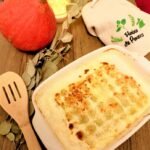
A specialty of Lyon, quenelles are light, airy dumplings made from a choux-like batter, traditionally flavoured with fish (often pike) or simply plain, and poached before being finished in the oven with a rich cream or béchamel sauce.
Ingredients
250 ml milk
50 g butter
150 g flour
3 eggs
200 g cooked fish or chicken, finely minced (optional)
250 ml cream or béchamel sauce, for serving
Salt and pepper, to taste
Instructions
Bring the milk and butter to a boil, then add the flour all at once, stirring vigorously until the dough pulls away from the sides of the pan.
Remove from heat and beat in the eggs one at a time until smooth. Fold in the fish or chicken if using.
Shape into small ovals using two spoons and poach gently in simmering salted water for 10-12 minutes, until they float and puff up.
Place the poached quenelles in a baking dish, cover with cream or béchamel, and bake at 200°C (400°F) for 15-20 minutes until golden on top.
Serve hot, straight from the oven, as a comforting main course.
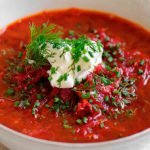
This gentle soup pays tribute to the sweet onions of the Val de Saône, once a staple crop of the region and the star of countless 19th-century farmhouse kitchens, simmered here with ripe tomatoes into a comforting potage.
Ingredients
4 large onions, sliced
3 tomatoes, chopped
1 clove garlic, minced
2 tbsp butter
1 litre vegetable or chicken stock
Salt and pepper, to taste
Instructions
Melt the butter in a large pot and cook the onions slowly over low heat for 20 minutes, until soft and sweet, without browning too much.
Add the garlic and tomatoes, and cook for a further 5 minutes.
Pour in the stock, season, and simmer for 20 minutes.
Blend until smooth, or leave rustic and chunky, as you prefer.
Named after the town of Pithiviers, this striking pastry consists of two rounds of puff pastry enclosing a rich almond cream, with a distinctive spiral pattern scored into the golden top before baking.
Ingredients
2 sheets puff pastry
125 g butter, softened
125 g sugar
125 g ground almonds
2 eggs
1 tsp vanilla or almond extract
1 egg yolk, for glazing
Instructions
Beat the butter and sugar together until pale, then mix in the ground almonds, eggs and vanilla extract to make a smooth almond cream.
Spread the almond cream over one round of pastry, leaving a border, and top with the second round, sealing the edges well.
Brush with egg yolk and use a knife to score a spiral pattern from the centre outward, without cutting through.
Bake at 200°C (400°F) for 30-35 minutes until deeply golden and puffed.
Serve warm or at room temperature, in thin slices.
Patranque comes from the Cantal region of Auvergne, a resourceful peasant dish designed to use up stale bread by melting it together with Cantal cheese into a rich, savoury skillet meal.
Ingredients
300 g stale bread, cubed
200 ml milk
300 g Cantal cheese, grated or thinly sliced
1 clove garlic
2 tbsp butter
Salt and pepper, to taste
Instructions
Soak the stale bread in the milk until softened.
Melt the butter in a pan and add the garlic and soaked bread, mashing it down with a spatula.
Cook over low heat, stirring, until the bread turns into a smooth, thick paste.
Stir in the cheese gradually, continuing to cook and stir until fully melted and combined.
Season well and serve hot straight from the pan.
A humble but deeply satisfying dish — best enjoyed piping hot.
This classic Corsican omelette pairs fresh brocciu cheese with fragrant mint — the softness of the cheese and the brightness of the herb make for a wonderfully light and quick dish.
Ingredients
6 eggs
200 g brocciu (or fresh ricotta)
A small handful of fresh mint, chopped
1 tbsp olive oil
Salt and pepper, to taste
Instructions
Beat the eggs with salt and pepper.
Crumble in the brocciu and stir in most of the chopped mint.
Heat the olive oil in a pan over medium heat and pour in the egg mixture.
Cook gently, lifting the edges to let uncooked egg flow underneath, until just set.
Fold or roll and scatter with the remaining mint before serving.
The combination of soft cheese and mint’s cooling fragrance makes this an irresistibly simple dish.
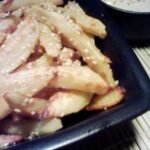
Named after the medieval town of Sarlat in the Périgord region, these potatoes are sautéed slowly in duck fat until deeply golden, then finished with garlic and parsley — a beloved companion to roasted duck or confit.
Ingredients
1 kg potatoes, peeled and sliced
3 tbsp duck fat
3 cloves garlic, minced
Handful of parsley, chopped
Salt and pepper, to taste
Instructions
Melt the duck fat in a large frying pan over medium heat.
Add the potato slices in a single layer and cook, turning occasionally, for 20-25 minutes until deeply golden and tender.
In the last few minutes, stir in the garlic and season well.
Scatter with parsley just before serving.
These potatoes are just as delicious as leftovers, reheated in a hot pan the next day.
Figatellu is Corsica’s most famous charcuterie — a smoked pork sausage rich with liver, traditionally eaten fresh and pan-fried or grilled. Here it’s paired with earthy lentils for a warming, rustic meal.
Ingredients
2 Figatellu sausages, sliced
250 g green lentils
1 onion, chopped
1 carrot, diced
1 bay leaf
Salt and pepper, to taste
Instructions
Cook the lentils with the onion, carrot and bay leaf in salted water for about 25 minutes, until tender but not mushy. Drain.
Meanwhile, pan-fry the sliced Figatellu until browned and cooked through.
Combine the lentils with the sausage and its cooking fat, and season to taste.
A simple, satisfying dish best enjoyed with a hunk of crusty bread.
Aligot comes from the Aubrac plateau, where legend says it was once served by monks to pilgrims walking the route to Santiago de Compostela. Mashed potato is beaten vigorously with fresh Tome cheese until it becomes wonderfully smooth and elastic, stretching in long ribbons as it’s served.
Ingredients
1 kg potatoes, peeled and quartered
400 g Tome fraîche de l’Aubrac (or fresh mozzarella as a substitute)
100 g butter
100 ml crème fraîche
1 clove garlic, minced
Salt, to taste
Instructions
Boil the potatoes until very tender, then drain and mash until completely smooth.
Return to low heat and beat in the butter, crème fraîche and garlic.
Add the cheese gradually, beating vigorously and constantly with a wooden spoon or spatula.
Continue beating until the mixture becomes smooth, glossy and stretches into long ribbons when lifted.
Serve immediately while hot and stretchy — Aligot loses its magic as it cools.
Once the daily sustenance of Gascon farmers, Garbure is a substantial soup built around cabbage, root vegetables and duck confit, simmered long and slow into a deeply comforting, complete meal in a single pot.
Ingredients
1/2 green cabbage, shredded
2 potatoes, diced
2 carrots, diced
1 onion, chopped
200 g dried white beans, soaked
2 duck confit legs
Salt and pepper, to taste
Instructions
Place the beans, carrots, onion and potatoes in a large pot, cover with water, and simmer for 45 minutes.
Add the cabbage and duck confit (with a little of its fat), and continue simmering for a further 45 minutes.
Season to taste, adding water if needed to keep a good soup consistency.
Shred the duck meat back into the soup before serving.
Garbure is traditionally finished with a splash of red wine swirled into the last spoonful — a custom known as “faire chabrot”.
This golden potato galette is wonderfully simple: thinly sliced or grated potatoes pressed into a crisp cake, golden and crunchy on the outside, tender within.
Ingredients
1 kg potatoes, peeled and thinly sliced or grated
2 tbsp butter
2 tbsp oil
Salt and pepper, to taste
Instructions
Pat the potatoes dry with a clean towel to remove excess moisture.
Heat the butter and oil in a large non-stick pan.
Press the potatoes evenly into the pan, season, and cook over medium heat for 10-12 minutes until golden underneath.
Carefully flip (using a plate to help) and cook the other side for a further 10 minutes.
Slice into wedges and serve hot, alongside roasted meat or a crisp green salad.